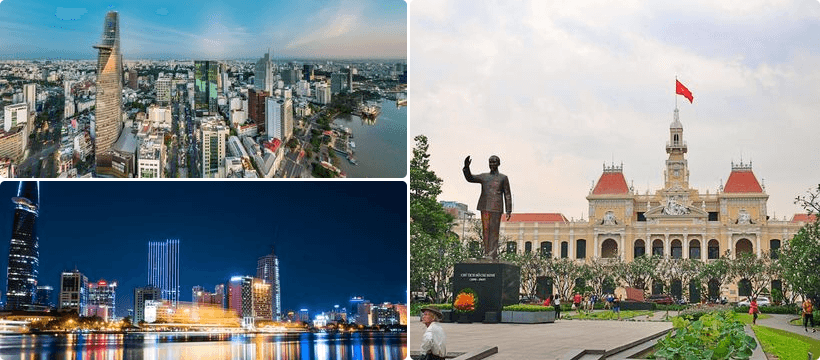
3. Getting Around Ho Chi Minh City
HCMC has no tourist-accessible metro covering the main sightseeing areas (Metro Line 1 connecting Ben Thanh to Suoi Tien opened in 2024 but serves mainly eastern suburbs). Getting around means Grab, xe om (motorbike taxi), metered taxis and the city bus network. Grab handles virtually all visitor transport needs efficiently.
Grab — The Essential App
✅
Grab Car: Fixed price before booking, air-conditioned. Within District 1: ₫30,000–60,000. D1 to Cholon (D5): ₫55,000–80,000. Airport (Tan Son Nhat) to D1: ₫100,000–160,000 (15–25 min). Surge pricing applies 17:00–19:00 weekdays and during rain.
✅
Grab Bike: Fastest for short D1 trips and navigating traffic. ₫15,000–40,000 for most local journeys. Helmets provided — use them. Not recommended for luggage-heavy travel.
✅
Airport options: Tan Son Nhat International Airport (SGN) is 8km from D1. Grab: ₫100,000–160,000. Official airport taxi (fixed rate counter in arrivals): ₫160,000–200,000. Metered Mai Linh or Vinasun taxi: ₫130,000–180,000 by meter.
⚠️
Xe om (motorbike taxi): Cheaper than Grab Bike but without fixed pricing — negotiate before boarding. Rates roughly match Grab Bike. Use for very short trips where Grab surge pricing makes it uneconomical.
⚠️
Crossing the road: HCMC traffic is even denser than Hanoi. The same technique applies: walk at a slow, steady pace and let the motorbikes flow around you. Never stop suddenly. Eye contact with approaching drivers helps — they will adjust. This skill is essential for enjoying the city on foot.
❌
Renting a motorbike: Not recommended for visitors unfamiliar with Vietnamese traffic — HCMC roads are among the most challenging urban driving environments in Asia. Stick to Grab unless you have significant prior experience with high-density Asian traffic.
"
Grab in Saigon is genuinely transformative for how you experience the city. I covered every district — Cholon, the museum belt, the riverside, Pham Ngu Lao — for about $2 per trip. The traffic that looks insane from the pavement is completely navigable once you're in it. Best urban transport setup I've used anywhere in Southeast Asia.
— Google Maps user S.Brennan_Dublin, HCMC transport review (verified, January 2026)
4. Practical Info: Money, SIM & Safety
Money & Payments
💵
HCMC is predominantly cash-based outside mid-range hotels, larger restaurants and shopping malls. Street food, markets, temples, xe om and smaller guesthouses require cash. Always carry ₫200,000–500,000. Vietnam dong uses large denominations — take care distinguishing ₫20,000 (blue) from ₫200,000 (blue-green) and ₫50,000 (pink) from ₫500,000 (blue-purple).
🏧
ATMs: Vietcombank, BIDV and Techcombank ATMs are the most reliable for international cards. Fee: ₫25,000–85,000 per withdrawal. Maximum withdrawal typically ₫3,000,000–5,000,000 per transaction. Withdraw larger amounts less frequently to minimise fees. Avoid standalone ATMs in tourist areas — use bank-branded machines.
💱
Currency exchange: Le Loi Street and the Ben Thanh Market area have authorised money changers offering competitive rates — better than hotels but check the board rate before agreeing. USD is the most widely accepted foreign currency for exchange.
💰
Cost reality: HCMC is one of Southeast Asia's best-value cities. Street meal (com tam or pho): ₫45,000–80,000. Grab across the city centre: ₫30,000–60,000. Bia Saigon beer at a street stall: ₫15,000–25,000. Budget ₫500,000–900,000/day ($20–36) for food, local transport and attractions.
SIM Cards
📶
Viettel or Vietnamobile SIMs: Available at Tan Son Nhat Airport arrivals hall (T1 and T2) and at mobile shops throughout D1. Viettel has the strongest urban coverage in HCMC. 7-day unlimited data + calls: ₫100,000–150,000. Buy at the airport before exiting — essential for setting up Grab on arrival.
📶
Registration: Vietnamese SIMs require passport at point of sale. The airport counters are open for all arriving flights. Pre-registered tourist SIMs from airport stalls work immediately — no separate activation required.
Safety
HCMC has a "Moderate" safety rating — lower than Hanoi due to higher rates of bag snatching and motorbike theft. The risk is real but manageable with basic precautions. Violent crime against tourists is rare; opportunistic theft is common in tourist-heavy areas.
🛵
Bag snatching: The primary risk — motorbike riders snatch bags from pedestrians, particularly on quiet side streets and near tourist attractions. Carry bags on the side away from the road. Use a cross-body bag with the clasp inward. Never hold your phone at eye level while walking on a main road.
🍺
Drink spiking: Reported in Bui Vien Walking Street and some Pham Ngu Lao bars. Avoid accepting drinks from strangers, keep drinks in sight at all times and use established venues with visible clientele.
🌡️
Heat: HCMC averages 28–35°C year-round with high humidity. Schedule outdoor activities before 10:00 and after 16:00. The city has less shade than Hanoi — carry water and sun protection for walking tours.
🏥
Medical: FV Hospital (Franco-Vietnamese Hospital) and Vinmec Central Park Hospital are internationally accredited with English-speaking staff. Travel insurance with evacuation cover is strongly recommended — healthcare costs for uninsured visitors can be substantial.
5. Best Time to Visit Ho Chi Minh City
HCMC has a tropical monsoon climate with two distinct seasons — dry and wet. Unlike Hanoi, there is no "cool" season — temperatures remain 28–35°C year-round. Based on Vietnam National Administration of Tourism data and seasonal review patterns:
| Season |
Months |
Weather |
Highlights |
Verdict |
| ☀️ Dry Season |
Dec – Apr |
28–35°C, low humidity, clear |
Tet (Jan/Feb), best outdoor conditions |
Best Overall |
| 🌦️ Early Wet |
May – Jun |
28–34°C, afternoon showers |
Fewer tourists, lower hotel prices |
Good Value |
| 🌧️ Peak Wet |
Jul – Nov |
26–32°C, heavy daily rain |
Cheapest hotel rates, Mekong at full flow |
Lowest Prices |
| 🎉 Tet Holiday |
Jan / Feb (variable) |
28–32°C, dry |
City-wide celebrations — or complete shutdown |
Book months ahead; verify what's open |
Note on the wet season: HCMC's monsoon rain is intense but predictable — heavy downpours typically last 30–90 minutes, usually in the late afternoon. The city has less covered infrastructure than Singapore or Bangkok, so flooding on low-lying streets (particularly around Ben Thanh and Pham Ngu Lao) is common after heavy rain. Carry a compact umbrella or light poncho between July and October. The War Remnants Museum, HCMC Fine Arts Museum and most major indoor attractions are entirely unaffected by rain.