1. Which Neighbourhood to Stay In
Seoul's 25 districts (gu) can seem overwhelming on first approach, but most visitors cluster around a handful of well-connected neighbourhoods. The city's subway network is so comprehensive that location is more about atmosphere and walkability than transit access — virtually every neighbourhood listed below is within 30 minutes of the major attractions. Based on 600+ accommodation reviews filtered to 8.5+ ratings on Booking.com and Google Maps, here is how the key areas compare:
| Area |
Best For |
Avg. Mid-Range Hotel |
Subway Access |
Verdict |
| Jongno / Insadong |
Palaces, heritage, traditional culture |
₩80,000–160,000 (~$58–116) |
Gyeongbokgung, Anguk (Line 3) |
Best for Culture |
| Myeongdong / Jung-gu |
Shopping, street food, central access |
₩90,000–200,000 (~$65–145) |
Myeongdong (Line 4), City Hall (Lines 1/2) |
Best All-Round |
| Hongdae (Hongik Univ.) |
Nightlife, indie music, younger crowd |
₩70,000–150,000 (~$51–109) |
Hongik University (Lines 2/A'REX/AREX) |
Best for Nightlife |
| Itaewon / Hannam-dong |
International dining, LGBTQ+, diverse bars |
₩85,000–190,000 (~$62–138) |
Itaewon (Line 6), Hangangjin (Line 6) |
Best for Food Scene |
| Gangnam / Sinchon |
Business, upmarket, K-pop agency tours |
₩110,000–280,000 (~$80–203) |
Gangnam (Line 2), Express Bus Terminal |
Upmarket / K-pop |
Research verdict: Myeongdong is the strongest base for first-time visitors — central location, direct subway access to major palace areas and airports, dense concentration of restaurants and street food, and the widest range of mid-range accommodation. Hongdae is the better pick for travellers prioritising nightlife and the indie culture scene. Jongno suits those wanting to walk to Gyeongbokgung Palace from their hotel door.
"
Seoul's subway is almost too good. I stayed in Myeongdong and could be at Gyeongbokgung in 15 minutes, Hongdae in 20, Gangnam in 25. The T-money card with ₩30,000 loaded lasted me four days of constant travel. I kept forgetting I was in a city of 10 million people.
— TripAdvisor user WanderlustFromWarsaw, Seoul review (verified stay, October 2025)
2. 5-Day Seoul Itinerary
This itinerary moves between Seoul's distinct cultural zones in a logical geographic sequence, minimising backtracking across the subway network. Palaces and heritage districts are front-loaded for the mornings when light is best and crowds are manageable. All subway lines and entry prices are specified.
Gyeongbokgung Palace
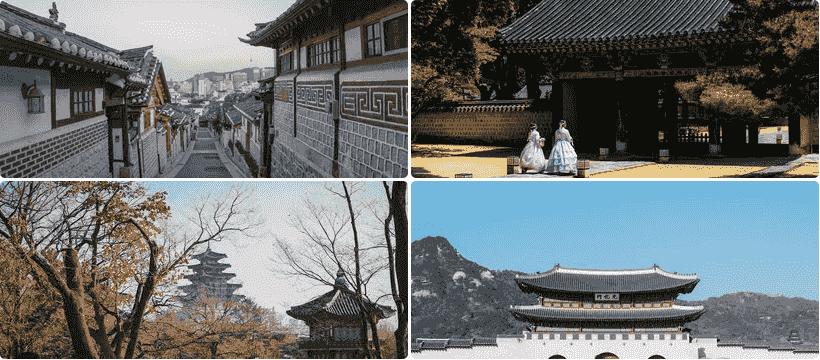
The largest and most impressive of Seoul's Five Grand Palaces, built in 1395 as the main royal palace of the Joseon Dynasty. The 57-hectare complex includes Geunjeongjeon (the throne hall), Gyeonghoeru Pavilion on its lotus pond, and the National Folk Museum of Korea within the grounds. The Changing of the Royal Guard ceremony takes place daily at 10:00 and 14:00 at Gwanghwamun Gate — a 20-minute pageant worth timing your visit around.
🚇 Line 3 (Orange) to Gyeongbokgung Station — Exit 5, 5 min walk
💡 Entry: ₩3,000. Free with hanbok (traditional dress) rental (₩20,000–40,000/3hrs — dozens of rental shops on the palace approach road). Closed Tuesdays.
Bukchon Hanok Village
The hillside neighbourhood of 900+ preserved hanok (traditional Korean wooden houses) between Gyeongbokgung and Changdeokgung palaces. The upper lanes (particularly Gahoe-dong alley) offer the best views of tiled rooftops against the Seoul skyline. The village is a living residential area — residents have posted signs asking visitors to be quiet and refrain from entering private property. Morning visits are significantly more peaceful than afternoons.
💡 Free to walk through. The Bukchon Cultural Centre (free) provides context on hanok architecture. Photography of the skyline view is best from the top of Bukchon-ro 11-gil.
Insadong — Galleries, Tea Houses & Street Food
Seoul's traditional arts district — 700 metres of galleries, antique shops, tea houses and craft vendors. Ssamziegil, a courtyard complex of independent boutiques, sits at the northern end. Insadong Tteokbokki (rice cake in spicy sauce, ₩4,000) and hotteok (sweet pancake, ₩2,000) are the street food mainstays. The Sunday market (11:00–18:00) brings out additional craft vendors and buskers.
💡 Insadong-gil is pedestrianised on weekends and holidays. Most galleries are free to enter. Best cafés for traditional sikhye (rice punch) or omija tea are on the smaller side streets.
Myeongdong Shopping & Street Food
Seoul's most commercially intense district — a 1km grid of K-beauty shops (Olive Young, Innisfree, Etude House), international brands and one of Korea's best street food concentrations. Myeongdong Street Food Alley runs parallel to the main shopping street: egg bread (계란빵, ₩2,000), cheese lobster (₩10,000), tornado potato (₩3,500). The area is at its best on weekday mornings before the afternoon surge.
🚇 Line 4 (Blue) to Myeongdong Station — Exit 5 or 6
💡 K-beauty bargaining: Duty Free shops (Lotte, Shinsegae) often offer 10–20% better prices than street shops for the same brands, especially with tourist discount cards.
Namsan Park & N Seoul Tower
Namsan Mountain (262m) sits at Seoul's geographic centre, accessible by cable car (₩12,000 return) or a 20-minute hike from Myeongdong. N Seoul Tower on the summit offers 360° views over the city from the observation deck (₩21,000). The outdoor terrace with the famous "love locks" fence is free. The hike through Namsan Park itself — forested trails through the mountain's city-centre green space — is one of Seoul's most pleasant outdoor experiences and entirely free.
💡 Cable car: ₩12,000 return. Tower observation: ₩21,000. The hike up (30–40 min from Myeongdong) is easier than it looks and skips the cable car queue.
Gwangjang Market — Evening Food Tour
Seoul's oldest market (established 1905) is primarily a traditional textile bazaar by day and one of the city's best street food destinations by evening. The mandu (dumplings) and bindaetteok (mung bean pancakes) stalls are the essential stops — the pancake section generates clouds of steam visible from the entrance. Budget ₩10,000–20,000 for a full eating tour of the food alley.
🚇 Line 1 (Dark Blue) to Jongno 5-ga Station — Exit 8, 3 min walk
💡 Open from 09:00; food stalls peak 17:00–21:00. The market was featured in multiple international food documentaries — arrive with appetite, it lives up to the reputation.
Itaewon — International Food District
Seoul's most internationally diverse neighbourhood — a result of its proximity to the US military base (Yongsan Garrison). The main street and side roads host an extraordinary range of restaurants: Middle Eastern, Ethiopian, Mexican, Indian, French. The Haebangchon (HBC) area just south is the best for independent cafés and bars. The Antique Furniture Street along Itaewon-ro 55-ga-gil has one of Seoul's best concentrations of Korean antique shops.
🚇 Line 6 (Brown) to Itaewon Station — Exit 1 or 2
Leeum Samsung Museum of Art
One of Asia's finest private art museums, designed by three separate world-renowned architects (Mario Botta, Jean Nouvel, Rem Koolhaas) housing Korean art from the Goryeo dynasty to contemporary works. Permanent collection alone justifies the visit — Korean celadon, white porcelain, Buddhist paintings and contemporary pieces by Lee Ufan and Nam June Paik. Located in Hannam-dong, a 10-minute walk from Itaewon station.
💡 Entry: ₩20,000. Audio guide included. Closed Mondays. Allow 2 hours minimum for the permanent collection.
Han River (Hangang) Park — Evening
The Han River, bisecting Seoul, is lined with riverside parks that come alive in the evening — Yeouido Hangang Park is the most popular, with a cycling path, fountain, convenience store food culture and riverside views of the city skyline. The Korean tradition of eating chimaek (치맥 — fried chicken and beer) from riverside convenience stores is one of Seoul's most authentic experiences: a meal for two costs ₩20,000–30,000.
🚇 Line 5 (Purple) to Yeouinaru Station — Exit 2, riverside park 5 min walk
💡 Convenience stores (CU, GS25, 7-Eleven) at the park sell fried chicken kits, beer, ramyeon and snacks. Bring a mat — locals arrive with portable gas stoves and picnics. River cruises (₩14,000–18,000) depart from Yeouido Hangang Park pier.
Hongdae Free Market & Street Art
Hongdae (Hongik University area) is Korea's centre of indie and underground culture — the neighbourhood surrounding the art university is packed with independent clothing shops, vinyl record stores, tattoo studios and live music venues. The weekend Free Market in Hongik Children's Park (Saturday and Sunday, 13:00–18:00) brings out student artists selling handmade goods. Street performers (buskers) are stationed throughout the area on weekends.
🚇 Line 2 (Green) to Hongik University Station — Exit 9
💡 The Hongdae club area peaks after 22:00. For daytime: focus on the smaller streets east of the main park for independent shops and cafés.
Yeonnam-dong — Cafés & Gyeongui Line Forest Park
Just east of Hongdae, Yeonnam-dong has become Seoul's most densely concentrated café district — independent specialty coffee shops, brunch restaurants and concept stores fill the converted residential streets. The Gyeongui Line Forest Park (경의선 숲길) — a linear green park built on a disused railway line — runs through the district, creating a pedestrian-and-cyclist corridor lined with street food stalls and pop-up markets.
💡 Peak café culture: Saturday afternoons. Most cafés have no time limits and serve excellent filter coffee (₩5,000–8,000). The forest park is at its best in cherry blossom season (late March–early April).
Korean BBQ Dinner
Korean barbecue — grilling beef (samgyeopsal/삼겹살 pork belly, galbi/갈비 short ribs, bulgogi) on a charcoal or gas tabletop grill with banchan (side dishes) — is the quintessential Seoul dining experience. Mid-range restaurants in Hongdae and Sinchon: ₩15,000–25,000 per person including grill meat, rice and banchan. For premium beef (hanwoo/한우), expect ₩40,000–80,000. Most restaurants provide aprons — the smoke is real.
💡 Hongdae neighbourhood tip: Sinchon station area (Line 2) has a dense cluster of KBBQ restaurants open until 02:00–03:00. Self-service KBBQ chains (Gopchang Jeon, Palsaik) offer good value for solo travellers.
Option A: DMZ Day Tour
The Korean Demilitarized Zone — the 4km-wide buffer between North and South Korea — is one of the world's most historically charged places and accessible on a guided day tour from Seoul (approximately 1 hour drive north). Key sites on most tours: Imjingak Pavilion (free zone), the 3rd Infiltration Tunnel, Dora Observatory (views into North Korea) and Dorasan Station (the last train station before the border). Tours depart at 07:30–08:00 from central Seoul and return by 15:00–16:00.
💡 Tour price: ₩55,000–90,000 per person (includes transport, guide and entry fees). Book in advance — popular tours sell out 3–5 days ahead. Passport required at all checkpoints.
Option B: Gangnam & COEX Starfield Library
If skipping the DMZ, spend Day 5 in Gangnam. The Starfield Library inside COEX Mall — a cathedral-like space with two-storey bookshelves, comfortable seating and free entry — is one of Seoul's most striking contemporary interiors. Gangnam-daero (the main boulevard) runs through Korea's wealthiest district; the surrounding area includes SM Entertainment and HYBE (BTS label) headquarters, both with official K-pop merchandise stores and fan experience centres.
🚇 Line 2 (Green) to Samseong Station — Exit 5 or 6, directly into COEX Mall
💡 COEX Starfield Library is free. HYBE Insight (BTS exhibition centre) requires advance ticket booking: ₩22,000. SM Entertainment Museum: ₩15,000.
Extension option — Busan (2 nights): KTX high-speed train from Seoul Station to Busan takes 2 hours 40 minutes (from ₩59,800). Korea's second city has Haeundae and Gwangalli beaches, the Gamcheon Culture Village, Jagalchi seafood market and a completely different pace to Seoul. A well-run overnight trip is feasible; 2 nights is more comfortable.
3. Getting Around Seoul
Seoul's subway (Metro) is one of the world's best urban rail systems — 9 lines, 300+ stations, fully bilingual signage (Korean and English), and a flat fare structure that makes the whole city affordable to navigate. For most visitors, the subway and T-money card cover 95% of all journeys.
T-money Card
✅
T-money card: Buy at any subway station (₩2,500 card, then load ₩10,000–30,000 at a machine or convenience store). Works on all subway lines, city buses and some taxis. Base subway fare: ₩1,400–1,800 depending on distance. Card gives a ₩100 discount per journey versus single tickets.
✅
AREX Airport Express: Incheon Airport to Seoul Station in 43 minutes (₩9,500, direct express) or 66 minutes (₩4,950, all-stop). The direct express has luggage storage, reserved seating and is by far the most comfortable option. Runs 05:20–23:40.
✅
Kakao T (ride-hailing): Korea's dominant ride-hailing app. English interface available. Base fare: ₩4,800. Airport to Myeongdong: ₩60,000–80,000. Useful for late-night journeys when the subway is closed (00:30–05:20).
⚠️
Metered taxis: Orange (medium), silver (deluxe) and black (premium) taxis. Meters start at ₩4,800. Flag one anywhere or use designated taxi stands at major stations. Use Kakao T for transparent pricing. Avoid unlicensed private cars at Incheon Airport — the authorised taxi counter is prominently signposted.
Key Subway Lines for Visitors
Line 1 (Dark Blue): Seoul Station, Dongdaemun. Line 2 (Green): Hongdae, Gangnam, Sinchon — the circular line covering most tourist areas. Line 3 (Orange): Gyeongbokgung Palace, Anguk (Bukchon). Line 4 (Blue): Myeongdong, Dongdaemun History & Culture Park. Line 6 (Brown): Itaewon, Hangangjin. AREX (Airport Express): Incheon Airport direct to Seoul Station.
"
Seoul's subway makes Tokyo's look complicated. Two lines get you almost everywhere tourists want to go — Line 2 (the green circular) and Line 3 (orange). Load ₩30,000 on a T-money card at the airport and you're set for the week. The English signage is perfect throughout.
— Google Maps user H.Nakagawa, Seoul transport review (verified, November 2025)
4. Practical Info: Money, SIM & Safety
Money & Payments
💳
Seoul is increasingly cashless — Visa and Mastercard accepted at most restaurants, shops, convenience stores and attractions. Many cafés and smaller restaurants are card-only. Carry ₩20,000–50,000 cash for traditional markets and street food.
🏧
ATMs: Global ATMs (accepting international Visa/Mastercard) are widespread — marked with a "Global" or "International" sticker. Woori Bank, KEB Hana Bank and NH Nonghyup Bank ATMs are most reliable. 7-Eleven and GS25 convenience store ATMs accept foreign cards 24/7 with modest fees (₩2,000–3,000).
💱
Currency exchange: Myeongdong money changers (particularly on the street between Myeongdong Cathedral and the main shopping street) offer competitive rates — better than airport counters but comparable to Hana Bank exchange centres. Always confirm the rate before transacting.
🏪
Convenience stores (편의점): CU, GS25, 7-Eleven and Emart24 are on every major block — open 24/7, sell warm meals, snacks, alcohol, SIM cards, ATM services and phone chargers. A filling convenience store meal (kimbap + ramen) costs ₩3,000–6,000.
SIM Cards
📶
KT, SKT or LG U+ tourist SIMs: Available at Incheon Airport arrivals (T1 and T2) and at KT/SKT counters in Myeongdong. 10GB for 10 days from ₩33,000; unlimited data for 30 days from ₩65,000. All three carriers have excellent 5G coverage across Seoul.
📶
Pocket Wi-Fi rental: Available at Incheon Airport — useful for groups. Daily rate ₩8,000–12,000. Pick up at arrivals counter and return at departure before check-in. Many cafés and subway stations also offer free Wi-Fi (ipTime).
K-ETA & Entry Requirements
Most nationalities (including EU, UK, US, Australia and Canada) are eligible for visa-free entry to South Korea for 90 days. However, K-ETA (Korean Electronic Travel Authorization) was suspended for many nationalities in 2023 and entry requirements change — check the Korean Embassy website for your country before travel. Passport must be valid for the duration of stay.
Safety
Seoul is one of the world's safest cities for tourists. Violent crime is extremely rare. The main practical considerations: cross streets at pedestrian crossings (vehicles do not yield to pedestrians mid-block), and be aware of the exceptionally vigorous drinking culture — heavy alcohol consumption is normalised in Korean entertainment districts and can make some areas (particularly Hongdae and Itaewon after midnight) boisterous.
5. Best Time to Visit Seoul
Seoul has four distinct seasons with significant temperature variation — from -10°C winters to 35°C summers. Based on Korea Tourism Organization data and seasonal review patterns, the two shoulder seasons are by far the strongest choices:
| Season |
Months |
Weather |
Highlights |
Verdict |
| 🌸 Spring |
Apr – Jun |
10–24°C, clear skies |
Cherry blossom (late Mar–Apr), Yeouido festival |
Best Overall |
| 🍂 Autumn |
Sep – Nov |
8–22°C, dry, vivid foliage |
Maple colour in palace gardens (Oct–Nov) |
Most Scenic |
| ❄️ Winter |
Dec – Feb |
-8–3°C, cold and dry |
Christmas lights, ski resorts day trip |
Cheapest Rates |
| ☀️ Summer |
Jul – Aug |
25–35°C, humid, monsoon |
Boryeong Mud Festival (July), Han River picnics |
Hot and humid — indoor-heavy itinerary advised |
Cherry blossom timing note: Seoul's cherry blossom peak has shifted earlier due to warming temperatures — currently centred on late March to early April (historically mid-April). Check the Korea Meteorological Administration's annual blossom forecast, released in February each year. Yeouido Hangang Park, Namsan Park and the Gyeongbokgung moat area are the best viewing spots. Hotel prices increase 30–50% during the peak blossom weekend.