Paris arrondissement map infographic: Marais, Saint-Germain, Montmartre, Latin Quarter and Eiffel Tower area compared with Metro lines and district highlights

1. Which Arrondissement to Stay In

Paris is divided into 20 arrondissements arranged in a clockwise spiral from the 1st (city centre) outward. The tourist debate about where to stay is primarily between the central arrondissements (1st–8th) — expensive, walkable to major sights — and the slightly outer arrondissements (9th–11th) which offer better value with identical Metro access. Based on 700+ accommodation reviews filtered to 8.5+ ratings on Booking.com and Google Maps:

Area Best For Avg. Mid-Range Hotel Metro Access Verdict
Le Marais (3rd/4th) Culture, LGBTQ+, galleries, Jewish quarter €130–280 / night Saint-Paul (L1), Arts et Métiers (L3/11) Best Location
Saint-Germain-des-Prés (6th) Literary cafés, Left Bank atmosphere, boutiques €150–320 / night Saint-Germain-des-Prés (L4) Most Atmospheric
Bastille / Oberkampf (11th) Nightlife, value, local neighbourhood €100–200 / night Bastille (L1/5/8), Oberkampf (L5/9) Best Value
Opéra / Grands Boulevards (9th) Shopping, central, department stores €110–220 / night Opéra (L3/7/8), Chaussée d'Antin Best for Shopping
Eiffel Tower / Trocadéro (7th/16th) Iconic views, upmarket, quiet €160–350 / night Trocadéro (L6/9), Bir-Hakeim (L6) Luxury / Views

Research verdict: Le Marais (3rd/4th arrondissements) offers the strongest combination of location, cultural density and neighbourhood character for first-time visitors. It sits midway between the Right Bank museums and the Left Bank, is walkable to Notre-Dame, the Centre Pompidou and the Place des Vosges, and has Paris's best concentration of independent food shops and Sunday markets (most of Paris is closed on Sundays — the Marais is a notable exception). The 11th arrondissement (Bastille/Oberkampf) is the best-value pick with identical Metro access.

The Marais on a Sunday morning is something I genuinely didn't expect from Paris. The Jewish bakeries open at 08:00, the Place des Vosges arcades are quiet, and you can walk to the Centre Pompidou before the crowds arrive. It's the most liveable version of central Paris — and it made everything else in the city feel accessible.

— TripAdvisor user SlowTraveller_Edinburgh, Paris review (verified stay, April 2026)

2. 5-Day Paris Itinerary

This itinerary is built around one non-negotiable principle: book all major museum and monument tickets in advance online. Walking up to the Louvre, the Eiffel Tower or the Palace of Versailles without pre-booked tickets in 2026 means queuing 1.5–3 hours. Every entry below notes whether advance booking is required. All Metro lines and ticket prices are included.

Day 1 Eiffel Tower, Trocadéro & Champs-Élysées
09:00
Eiffel Tower
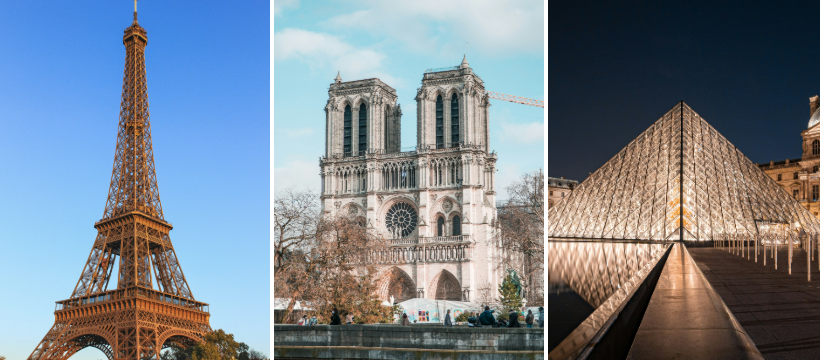
The 330-metre iron lattice tower — built for the 1889 World's Fair and originally intended as a temporary structure — remains one of the world's most recognisable landmarks. The second floor (115m) and summit (276m) both require separate tickets. The summit offers views extending 70km on clear days. The ground-level Champ de Mars park surrounding the tower is free and provides the classic full-tower photograph angle from the south.
🚇 Metro Line 6 to Bir-Hakeim or RER C to Champ de Mars-Tour Eiffel
💡 Tickets: 2nd floor €18.80, summit €29.40 (adult). Book on the official eiffeltower.com website — third-party sites charge up to 30% more. First available online slots book out weeks in advance during peak season. Arrive at opening (09:00) if you have tickets; the tower is less crowded before 10:30.
11:30
Trocadéro Gardens & Palais de Chaillot
Cross the Seine to the Trocadéro esplanade — the elevated platform offering the most photographed view of the Eiffel Tower, framed between the two curved wings of the Palais de Chaillot. The Cité de l'Architecture et du Patrimoine (€9) and the Musée de la Marine (€12) are both housed within the Palais. The Trocadéro fountains below the esplanade are free and atmospheric, particularly on summer evenings.
💡 The Trocadéro viewpoint is free and open 24/7. Best photographed at golden hour (one hour before sunset) when the Eiffel Tower is illuminated. The tower sparkles for 5 minutes every hour after dark until 01:00.
14:00
Champs-Élysées & Arc de Triomphe
The 1.9km "most beautiful avenue in the world" runs from the Place de la Concorde to the Arc de Triomphe — largely given over to international chain stores and overpriced restaurants at street level, but worth walking once for the scale and the Arc at the end. The Arc de Triomphe observation deck (€13) is reached by a free underpass crossing from the Champs-Élysées — do not attempt to cross the road surface. The 284-step spiral staircase leads to rooftop views of the 12 avenues radiating from the Place Charles de Gaulle.
🚇 Metro Lines 1/2/6 to Charles de Gaulle — Étoile
💡 Arc de Triomphe: €13, book online to skip the ticket queue. First Sunday of each month: free entry. The view from the top at sunset — with the Eiffel Tower visible to the southwest — is one of Paris's best free (or near-free) panoramas.
Day 2 The Louvre, Tuileries & Musée d'Orsay
09:00
The Louvre
The world's largest art museum — 72,735 works across 403 rooms in a former royal palace covering 210,000 m². A single day is not enough to see everything; a focused 3-hour visit hitting the Denon Wing highlights (Winged Victory, Venus de Milo, Mona Lisa, Wedding at Cana) is more satisfying than an exhausting full-day sweep. The Mona Lisa room is genuinely crowded even at opening — manage expectations (the painting is smaller than most people expect) and focus on the overlooked masterpieces on the surrounding walls.
🚇 Metro Lines 1/7 to Palais Royal — Musée du Louvre
💡 Entry: €22. Book online — same-day tickets often unavailable. Enter via the Richelieu passage (less crowded than the Pyramid entrance). Under-26 EU citizens: free. First Friday evening of each month: free for all under 26 worldwide.
12:30
Tuileries Garden & Lunch
The formal garden between the Louvre and the Place de la Concorde is Paris's most elegant public park — 28 hectares of gravel paths, fountains and clipped linden trees designed by André Le Nôtre in 1664. The Orangerie Museum at the western end houses Monet's massive Water Lilies panels in two oval rooms specifically designed for the works (€12.50, book in advance). Café de Flore de la Paix by the central fountain: €18–28 for a croque-monsieur lunch, or the Angelina tearoom in the park: €15–22.
💡 Orangerie: €12.50, often more moving than the Louvre's crowds — the Water Lilies rooms are designed for contemplation, not tourism. Allow 45–60 min. Closed Tuesdays.
15:30
Musée d'Orsay
The former Beaux-Arts railway station houses the world's greatest collection of Impressionist and Post-Impressionist art — Monet, Renoir, Degas, Van Gogh, Cézanne, Seurat and Gauguin in a spectacular glass-roofed hall. The collection covering 1848–1914 is far more focused and manageable than the Louvre. The giant clock faces on the upper floor — photographed through the glass onto the Seine and Sacré-Cœur — are one of Paris's great interior views.
🚇 RER C or Metro Line 12 to Solférino
💡 Entry: €16. Book online — skip-the-line essential. Thursday late opening until 21:45 (€16, same price). The Thursday evening session is the least crowded time to visit. Closed Mondays.
Day 3 Notre-Dame, Le Marais & Centre Pompidou
09:00
Notre-Dame Cathedral
Notre-Dame de Paris — reopened December 2024 after the devastating April 2019 fire — has been restored with extraordinary care, with many areas returned to their pre-fire condition and some improved. The Gothic interior (free entry to the nave, timed entry required) and the restored rose windows are genuinely spectacular. The towers (€10, 387 steps, views over the Île de la Cité) have resumed ticketed access. The cathedral's island setting on the Île de la Cité, surrounded by the Seine, makes the exterior approach from the Pont Saint-Louis one of Paris's great architectural arrivals.
🚇 Metro Line 4 to Cité or Saint-Michel Notre-Dame
💡 Interior entry: free, timed-entry booking required on notredamedeparis.fr. Tower access: €10, separate timed booking. Capacity is strictly controlled post-restoration — book both well in advance, especially for summer visits.
11:30
Le Marais — Place des Vosges & Sainte-Chapelle
Place des Vosges — Paris's oldest planned square (1612), a perfect quadrangle of red brick and stone arcades — is the Marais's centrepiece. Victor Hugo's apartment at No. 6 is now a free museum. Sainte-Chapelle (a 10-minute walk west on the Île de la Cité, €13.50) contains arguably the most beautiful Gothic stained glass in the world — 15 floor-to-ceiling windows covering 600m² of 13th-century glass in 1,113 individual scenes. Book tickets online — the queue without a ticket can exceed 90 minutes.
💡 Sainte-Chapelle: €13.50, book online. Best light for the windows: midday on a sunny day when the upper chapel is fully illuminated. Combined ticket with Conciergerie (former royal prison): €18.50.
15:00
Centre Pompidou
The inside-out building with its exterior escalators and colour-coded mechanical systems houses Europe's largest modern art museum — 120,000 works from Picasso and Matisse through to contemporary installation and digital art. The collection alone justifies a visit; the building's iconic form and the panoramic views of Paris from the rooftop terrace are additional rewards. The surrounding Place Georges Pompidou hosts street performers, the Stravinsky Fountain's kinetic sculptures and one of Paris's best concentrations of cheap falafel restaurants (Rue des Rosiers, adjacent in the Marais).
💡 Entry: €15 (permanent collection + temporary exhibition). Closed Tuesdays. The rooftop terrace view (included in ticket) offers one of Paris's most distinctive panoramas — Sacré-Cœur visible to the north, Notre-Dame to the east. Under-26 EU: free.
Day 4 Montmartre, Sacré-Cœur & Left Bank
08:30
Sacré-Cœur & Montmartre Village
The white Romano-Byzantine basilica at the summit of the Butte Montmartre (130m) is Paris's second-most visited monument. Arrive before 09:30 to experience the hilltop village atmosphere before the tour groups arrive. The view from the dome (free exterior steps to the parvis, or €8 for the dome interior) takes in the entire Paris basin on clear days. The surrounding Montmartre village — artist studios, vine-covered walls, Place du Tertre (the traditional artists' square) and the original Moulin Rouge — rewards slow morning wandering.
🚇 Metro Line 12 to Abbesses (then walk up) or funicular from Anvers (1 Metro ticket)
💡 Basilica entry: free. Dome: €8. The funicular (1 regular Metro t+ ticket) saves the steep staircase climb. Best photography: early morning light from the parvis, looking south over Paris.
12:00
Latin Quarter — Panthéon & Lunch
The Latin Quarter on the Left Bank is Paris's historic university district — centred on the Sorbonne (founded 1253) and the surrounding bookshops, cafés and student restaurants. The Panthéon (€13) — the neoclassical mausoleum housing the remains of Voltaire, Rousseau, Curie, Hugo and Zola — has a Foucault pendulum demonstrating the Earth's rotation still operating in the nave. Shakespeare and Company bookshop (open daily, free) on the Seine bank is Paris's most famous English-language bookshop and an essential stop for literature lovers.
🚇 Metro Line 10 to Cardinal Lemoine or RER B to Luxembourg
💡 Panthéon: €13, book online. First Sunday of each month: free. The Jardin du Luxembourg (free, open daily) adjacent to the Panthéon is Paris's most beautiful public garden — 23 hectares of formal French gardens and tree-lined promenades.
15:30
Saint-Germain-des-Prés — Cafés & Evening
The 6th arrondissement's literary café tradition — Café de Flore and Les Deux Magots on the Place Saint-Germain-des-Prés — was the meeting ground of Sartre, Beauvoir, Hemingway and Picasso in the 20th century. Coffee is €5–8 (expensive but the terrace experience is part of Paris). The surrounding streets (Rue de Buci, Rue de Seine) have Paris's best food market and cheese shops. Dinner in Saint-Germain: budget €20–35 for a bistro menu du jour (starter + main + glass of wine).
💡 Café de Flore and Les Deux Magots are tourist landmarks — the coffee is good but expect €6–8 per cup and a wait for terrace seats. The more authentic Saint-Germain café experience is on the side streets one block off the main boulevard.
Day 5 Versailles Day Trip
08:00
Palace of Versailles — Gardens & Grand Appartements
The former royal palace of Louis XIV — 700 rooms, 2,300 windows, the Hall of Mirrors and 800 hectares of formal gardens — is one of the world's greatest royal residences and a UNESCO World Heritage Site. The palace interior (Passport ticket covers the Grand Appartements, Hall of Mirrors and Queen's Chambers) and the gardens (free except on Grand Fountain Show days) require separate planning. Arrive at the gates before 09:00 to beat the morning queue — by 10:30 the courtyards are at capacity. The Trianon palaces (Petit Trianon and Grand Trianon) in the far gardens are included in the Passport ticket and far less crowded than the main palace.
🚃 RER C from Paris to Versailles Château — Rive Gauche — 35–40 min, €4.50 each way. Departs every 15–30 min from Gare d'Austerlitz, Saint-Michel or Invalides.
💡 Passport ticket: €20 (palace + gardens, excluding Fountain Show days). Grand Fountain Show (Sat/Sun Apr–Oct): +€10. Book on chateauversailles.fr — same-day tickets frequently unavailable in peak season. The gardens alone justify the trip even if the palace queues are prohibitive.

Additional day trip option — Mont Saint-Michel (full day): The medieval island abbey in Normandy is 3.5 hours from Paris Montparnasse by TGV to Rennes then connecting bus (from €29–69 each way, book 3+ weeks ahead on SNCF Connect). The tidal island, surrounded by quicksand mudflats and one of the world's largest tidal ranges, is best visited at high tide when it appears to float. The abbey interior (€13) is extraordinary. An overnight stay lets you experience the island after the day-trip crowds depart.