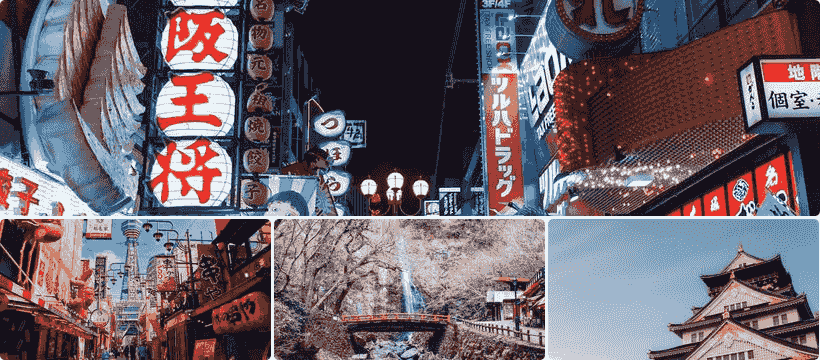
1. Which Neighbourhood to Stay In
Osaka is compact and linear — the city runs roughly north–south along the Midosuji subway line, making it easy to navigate regardless of where you base yourself. The neighbourhood choice is primarily about atmosphere and walking distance to the areas you plan to spend the most time in. Based on 580+ accommodation reviews filtered to 8.5+ ratings on Booking.com and Google Maps:
| Area |
Best For |
Avg. Mid-Range Hotel |
Subway Access |
Verdict |
| Namba / Dotonbori |
Street food, nightlife, shopping |
¥8,000–18,000 (~$55–125) |
Namba (Midosuji / Sennichimae lines) |
Best All-Round |
| Shinsaibashi |
Shopping, central location, upmarket dining |
¥9,000–22,000 (~$62–152) |
Shinsaibashi (Midosuji / Nagahori lines) |
Best for Shopping |
| Umeda (Osaka Station) |
Business, transport hub, department stores |
¥8,500–20,000 (~$59–138) |
Osaka / Umeda (multiple lines, JR) |
Best Transit Hub |
| Shinsekai / Tennoji |
Retro atmosphere, budget, Tsutenkaku Tower |
¥5,500–13,000 (~$38–90) |
Tennoji (Midosuji / Tanimachi lines) |
Best Value |
| Honmachi / Nakazakicho |
Local cafés, design district, less touristy |
¥7,000–16,000 (~$48–110) |
Honmachi, Nakazakicho (Midosuji line) |
Local Pick |
Research verdict: Namba is the strongest base for first-time visitors — Dotonbori, Shinsaibashi shopping arcade, Kuromon Market and the Namba subway interchange are all within walking distance. For a slightly quieter base with identical subway access, Shinsaibashi (one stop north on the Midosuji line) offers the same connectivity with less evening noise. Umeda is the pick for travellers making frequent Shinkansen day trips to Kyoto, Nara or Kobe.
"
Osaka people genuinely take pride in how good their food is — and they're right to. I spent three days eating my way through Dotonbori, Shinsekai and Kuromon Market, and every single meal was better than anything equivalent in Tokyo. The Osaka subway gets you anywhere in under 20 minutes. Perfect city.
— TripAdvisor user FoodFirst_Amsterdam, Osaka review (verified stay, March 2026)
2. 3-Day Osaka Itinerary
Osaka is best experienced as a series of distinct neighbourhood walks connected by the Midosuji subway line. This itinerary assigns one zone per day — castle and park in the morning, market or shopping district in the afternoon, izakaya street in the evening. All subway lines and entry prices are specified.
Osaka Castle & Nishinomaru Garden
The reconstructed 1931 keep (originally built 1583 by Toyotomi Hideyoshi) sits at the centre of an 8-hectare park and moat system. The castle interior houses a history museum across 8 floors with the panoramic observation deck on the 8th floor offering exceptional views over the city. Nishinomaru Garden adjacent to the castle is the best spot in Osaka for cherry blossom viewing in late March–early April (¥200 entry). Arrive before 10:00 on weekdays for manageable crowds.
🚇 Tanimachi Line to Tanimachi 4-chome Station — Exit 1B, 10 min walk to castle
💡 Castle keep entry: ¥600. Park is free. Allow 2 hours for castle + grounds. The castle is dramatically lit at night — worth passing by after dark.
Kuromon Ichiba Market — Lunch
Osaka's 600-stall covered market — operating since 1822 and known as "Osaka's Kitchen" — is the city's most authentic food market and one of Japan's best eating experiences. The market runs 580 metres through covered arcades packed with fresh seafood, Kobe beef skewers, fugu (puffer fish), oysters, tamagoyaki and fresh fruit. Unlike many tourist markets, Kuromon is still primarily a working wholesale and retail market serving restaurant buyers alongside visitors.
🚇 Sennichimae Line to Nipponbashi Station — Exit 10, 1 min walk
💡 Budget ¥1,500–3,000 for a full market lunch. Most stalls close by 17:00–18:00. Best seafood window: 11:00–14:00 when morning deliveries are freshest.
Shinsaibashi Shopping Arcade
Japan's longest covered shopping street — 580 metres of boutiques, cosmetics, electronics and food shops running from Shinsaibashi to Namba. The northern section (Shinsaibashi-suji) is upmarket; the southern Namba section more affordable. Connected side streets like Amerika-Mura (American Village) have independent vintage clothing and streetwear shops in a cluster around Triangle Park.
💡 Shinsaibashi arcade is free to walk and open until 20:00–21:00 for most shops. Amerika-Mura is best on weekend afternoons when street performers set up around Triangle Park.
Dotonbori at Night
The 500-metre Dotonbori canal strip is Osaka's most iconic image — neon signs, the Glico running man billboard, giant mechanical crabs and takoyaki (octopus ball) vendors reflected in the canal. Most impressive after dark, when the LED signs illuminate the waterway. The canal walkway (Tombori River Walk) runs at water level below the main street, offering the best photo angles of the canal reflections.
💡 Must-try on Dotonbori: takoyaki (¥500–700 for 6 pieces), kushikatsu (deep-fried skewers, ¥100–180 each) and Ichiran ramen (solo ramen booths, ¥980). The strip is busiest and most photogenic 19:00–22:00.
Tsutenkaku Tower & Shinsekai
Shinsekai ("New World") was built in 1912 as Osaka's entertainment district — modelled simultaneously on Paris (northern section) and Coney Island (southern section). Now a retro neighbourhood of kushikatsu restaurants, vintage pachinko parlours and the 108-metre Tsutenkaku Tower. The area has a completely different character from tourist Osaka — local, working-class and atmospheric. The ground floor of Tsutenkaku is free; the observation deck costs ¥800.
🚇 Midosuji Line to Dobutsuen-mae Station — Exit 3, 5 min walk to tower
💡 Shinsekai kushikatsu rule: never double-dip in the communal sauce. This is taken very seriously. The rule is displayed in every restaurant. Lunch budget: ¥1,200–2,000 for 8–10 skewers.
Tennoji Zoo & Tennoji Park
Tennoji Zoo (¥500) — Japan's third-oldest zoo — sits within the extensive Tennoji Park complex adjacent to Shitennoji Temple (founded 593 AD, Japan's oldest Buddhist temple complex, ¥500 inner garden). The park's central garden is free and pleasant for a midday break. The Abeno Harukas skyscraper (300m, Japan's tallest building) immediately adjacent has a rooftop observation deck (¥2,000) with views extending to Kyoto on clear days.
💡 Shitennoji Temple: ¥500 inner garden, outer grounds free. Best visited weekday mornings. Abeno Harukas observation deck (Harukas 300): ¥2,000 — excellent on clear days when Osaka Bay and Awaji Island are visible.
Hozenji Yokocho Lane & Namba Walkways
A narrow stone-paved alley of about 50 metres running behind Namba's main street — lined with old-fashioned kappo (Japanese cuisine) restaurants and sake bars, centred on the moss-covered Fudo statue at Hozenji Temple. The lane has been operating since the Edo period and retains a pre-war atmospheric character amid the surrounding modern Namba development. Best experienced in the early evening before the tourist crowd arrives.
💡 Free to walk through. The Fudo statue is splashed with water by worshippers — it is entirely covered in moss as a result. The lane is open until the last restaurant closes (~23:00).
Izakaya Evening — Souemon-cho or Kitashinchi
Souemon-cho (south of Dotonbori) is Osaka's most concentrated bar and izakaya district — hundreds of venues in a dense two-block area. Kitashinchi in Umeda is the upmarket alternative with Michelin-starred kaiseki restaurants alongside excellent standing bars (tachinomi). Budget izakaya per person including food and drinks: ¥2,500–4,500. Stand-up bars (tachinomi): ¥500–1,500 for drinks + small dishes.
💡 Osaka tachinomi (standing bar) culture: brief, sociable, inexpensive. Look for the standing counter bars on the ground floors of entertainment buildings around Namba. Most operate from 17:00 until midnight.
Option A: Nara Day Trip
Nara — Japan's ancient capital before Kyoto — is 45 minutes from Osaka by Kintetsu Express train (¥730 from Namba) or 1 hour by JR (¥760 from Osaka Station with JR Pass). Nara Park's 1,200 free-roaming sacred deer are one of Japan's most extraordinary wildlife encounters — the deer bow to receive shika senbei crackers (¥200/pack from vendors at the park entrance). Todai-ji Temple houses Japan's largest bronze Buddha (15 metres) within the world's largest wooden structure. Kasuga Taisha shrine's 3,000 stone and bronze lanterns are best seen at dusk.
🚃 Kintetsu Nara Line from Osaka Namba to Kintetsu-Nara — 45 min, ¥730. Departs every 30 min.
💡 Todai-ji entry: ¥600. Kasuga Taisha inner precinct: ¥500. The deer are most active in the morning. Do not show deer crackers until you are ready to use them — the deer are persistent and will headbutt to obtain them.
Option B: Kyoto Day Trip
Kyoto is 15 minutes from Osaka by Shinkansen (¥1,490, departs Shin-Osaka Station) or 30 minutes by express train (¥560, Hankyu or JR from Umeda/Osaka Station). The short journey makes Kyoto an excellent day trip — arrive by 08:30 for Fushimi Inari before the crowds, then Gion and Nishiki Market in the afternoon. Full Kyoto coverage is in the separate TripCurator Kyoto Guide.
🚄 JR Shinkansen from Shin-Osaka to Kyoto — 15 min, ¥1,490 (or ¥560 express, 30 min)
💡 JR Pass holders: Shinkansen Hikari/Sakura services are covered. For single-day Kyoto from Osaka, the express train (560 yen, no pass needed) is often more convenient given Shin-Osaka station's additional walk time.
Extension option — Kobe (1 day): Japan's international port city is 30 minutes west of Osaka by Hankyu or JR train (¥410–530). Kitano-cho's Western-style Meiji-era residences, Nankinmachi Chinatown and the Kobe beef steakhouse strip around Kitanozaka make an excellent half-day addition. Kobe beef at a mid-range steakhouse: ¥4,000–8,000 for a full lunch set.
3. Getting Around Osaka
Osaka has one of Japan's best urban transit networks — the Osaka Metro (formerly Municipal Subway) covers the entire city with 9 lines. The Midosuji Line running north–south through Umeda, Shinsaibashi, Namba, Tennoji and Nakamozu covers virtually every tourist area in a single line. The ICOCA card works across all Osaka Metro, JR and private railway services.
ICOCA Card & Day Passes
✅
ICOCA IC Card: Buy at any Osaka Metro or JR station (¥2,000 — ¥500 deposit, ¥1,500 usable value). Works on all Osaka Metro lines, JR West trains and buses. Base fare: ¥180–370 per journey. Also works at convenience stores, vending machines and many restaurants.
✅
Osaka 1-Day Pass (¥820) or 2-Day Pass (¥1,220): Unlimited rides on all Osaka Metro lines. Worth it if you take 5+ subway trips in a day. Available at station ticket machines. The "Enjoy Eco Card" (weekend version, same price) also includes discounts at some attractions.
✅
Osaka Amazing Pass (1-day ¥2,500 / 2-day ¥3,300): Includes unlimited Osaka Metro rides + free entry to 40+ attractions including Osaka Castle, Tsutenkaku Tower and cruise boats. Worth calculating against your planned itinerary — can save ¥1,500–3,000 if you visit multiple paid attractions.
✅
Kansai ICOCA & Rail Pass: For visitors making day trips to Kyoto, Nara, Kobe and Hiroshima — the Kansai Area Pass (1–5 days, from ¥2,400) covers JR trains within the Kansai region. More economical than a full JR Pass for Kansai-only travel.
✅
Airport access: Kansai International Airport (KIX) to Namba via Nankai Rapi:t express: 38 minutes, ¥1,450. To Osaka Station via JR Haruka: 50 minutes, ¥2,380 (JR Pass accepted). Itami Airport (ITM, domestic) to Osaka Station via Osaka Monorail + Hankyu: ~45 minutes, ¥690.
"
The Midosuji Line is genuinely the best subway line I've used anywhere in the world — Umeda to Namba is 4 stops, 7 minutes, ¥230, and you've crossed the entire tourist city. The 1-day pass is worth it on day one alone. Osaka is the most efficiently navigable big city in Japan.
— Google Maps user R.Okonkwo_London, Osaka transport review (verified, April 2026)
4. Practical Info: Money, SIM & Food Budget
Money & Payments
💵
Osaka remains heavily cash-dependent outside major hotels and department stores. Street food, izakayas, most ramen shops, taxis, convenience stores and smaller restaurants require cash. Always carry ¥5,000–10,000. The ICOCA card functions as a cashless payment option at convenience stores and many chain restaurants.
🏧
7-Eleven ATMs: The most reliable option for international cards in Japan. Fee: ~¥110 per withdrawal. Available 24/7 at every 7-Eleven convenience store — there is one within 2 minutes of any location in Osaka's centre. Japan Post Bank ATMs (at post offices) also accept international cards.
💳
Visa and Mastercard accepted at major hotels, department stores (Takashimaya, Daimaru) and larger restaurants. Contactless (Apple Pay, Google Pay) increasingly accepted in chain restaurants and shops. Tax-free shopping available at designated counters for purchases over ¥5,000 on presentation of your passport.
Food Budget Reality — "Kuidaore" Culture
Osaka's kuidaore (食い倒れ, "eat until you drop") philosophy means exceptional food is available at every price point. Unlike Tokyo, where premium dining dominates the discourse, Osaka takes equal pride in its cheap street food as its Michelin restaurants.
🐙
Takoyaki: ¥500–700 for 6 pieces at Dotonbori stalls. The octopus ball is Osaka's signature snack and varies significantly in quality — Aizuya (original 1933 recipe) and Wanaka are the most recommended by locals.
🍜
Ramen: ¥800–1,200 at most Osaka ramen shops. Ichiran (solo booths, ¥980) and Kinryu Ramen (Dotonbori, open 24 hours, ¥900) are the most accessible for non-Japanese speakers.
🍱
Full sit-down meal: ¥1,000–2,000 at mid-range teishoku (set meal) restaurants. Department store basement food halls (depachika) — particularly Takashimaya and Daimaru in Namba/Shinsaibashi — sell exceptional prepared foods at ¥500–1,500 per item.
🥩
Kushikatsu (Shinsekai): ¥100–180 per skewer; budget ¥1,500–2,500 for a satisfying set with beer. The Shinsekai version uses a unique Worcester-sauce-based dipping sauce.
SIM Cards
📶
IIJmio, Mineo or OCN Mobile: Available at Kansai Airport vending machines and Yodobashi / BIC Camera electronics stores in Namba and Umeda. 10GB for 15 days from ¥1,800; unlimited data for 30 days from ¥3,200. Insert and use immediately — no registration required for tourist SIMs.
📶
Pocket Wi-Fi rental: Available at KIX Airport. Daily rate ¥400–800. Return by post before departing Japan. Useful for groups or those needing simultaneous device connections.
5. Best Time to Visit Osaka
Osaka shares Kyoto's climate and seasonal patterns — both sit in the Kinki region with similar temperature ranges. The two shoulder seasons are overwhelmingly the best choice for most visitors. Based on Osaka Meteorological Observatory data and seasonal review patterns:
| Season |
Months |
Weather |
Highlights |
Verdict |
| 🌸 Spring |
Mar – May |
10–22°C, clear |
Cherry blossom at Osaka Castle Park (late Mar) |
Best Overall |
| 🍂 Autumn |
Oct – Nov |
12–22°C, low humidity |
Autumn foliage at Mino Park, comfortable temperatures |
Most Comfortable |
| ❄️ Winter |
Dec – Feb |
3–12°C, occasional snow |
Lowest hotel prices, illumination events |
Best Value |
| ☀️ Summer |
Jun – Sep |
25–36°C, humid, rainy Jun–Jul |
Tenjin Matsuri festival (July 24–25) |
Hot and humid — manage with early starts |
Golden Week (late April – early May) warning: Japan's Golden Week holiday (April 29 – May 5) is the peak domestic travel period — Osaka Castle Park fills to capacity, Dotonbori becomes genuinely difficult to navigate, and hotel prices increase 40–100%. If your travel dates include Golden Week, book accommodation 3–4 months in advance and plan to visit major attractions at opening time.